Caleta Gonzalo to Puyuhuapi

What a contrast to yesterday. The cloud is almost down to sea level with a steady drizzle.  Easy to see why everthing is so green here.  Breakfast at the Caleta Gonzalo lodge was a DIY affair because most of the kitchen staff didn’t start until after 8am. No shortage of home made bread and freshly laid eggs but a big opportunity for someone to take the initiative and sell proper coffee machines to every restaurant and cafe throughout the country.  A bit of a mysteryhow Nescafé Instant has the market cornered when South America has the best coffee beans.

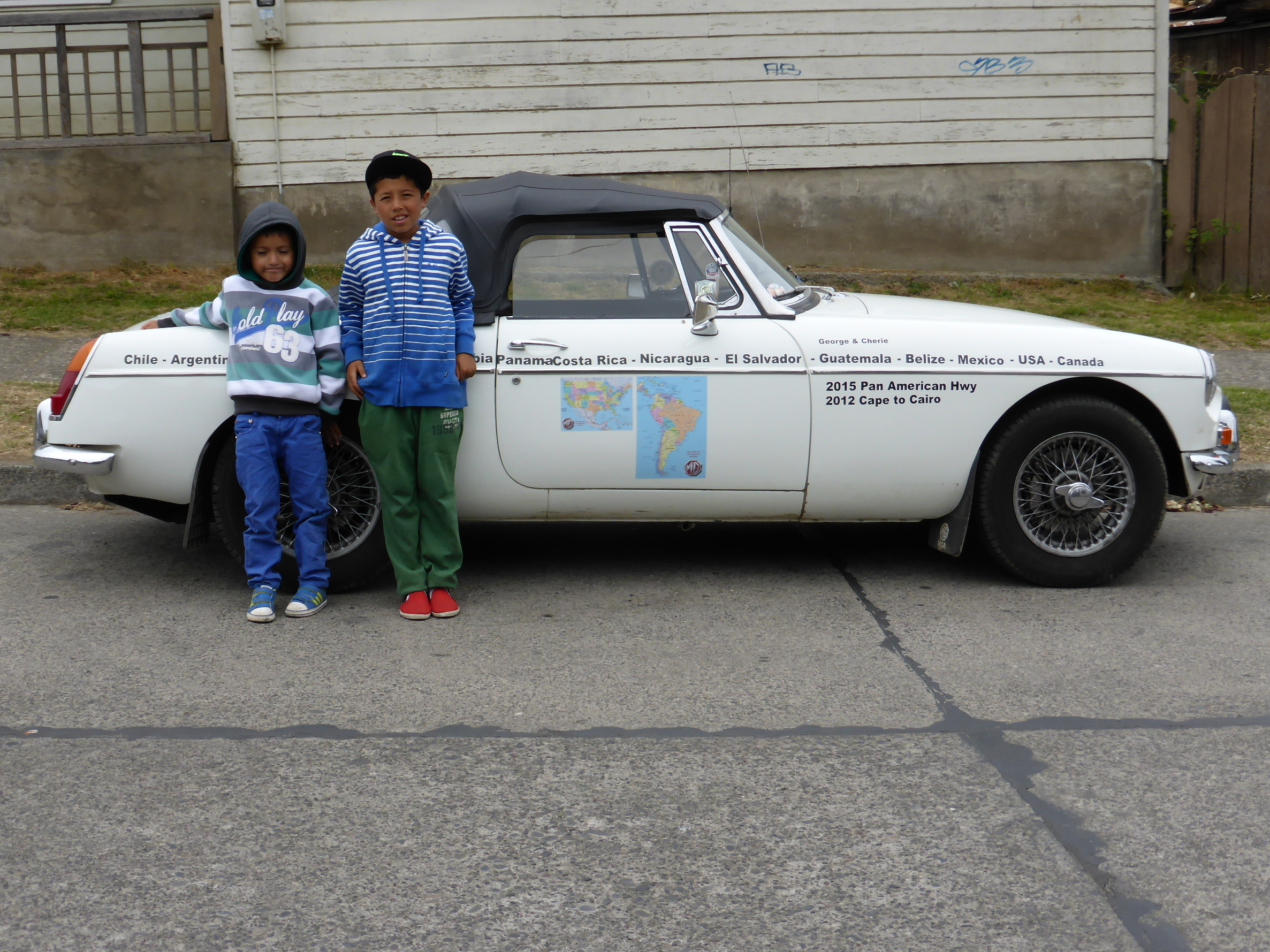
The road out took us through the southern section of Parque Pumalin with its lush rainforest.  Everywhere we stop there are amazing displays of native fuchsias and other colourful plants right by the roadside  The display continued almost to Chaiten, a fairly run down town which was almost devastated by lava flow from the eruption of a nearby volcano in 2008. Just a few kms before Chaiten, George and Cherie had the first puncture of the trip. They are running the same tyres as our car and several others – Michelin XM2 which we selected as the best compromise for wet grip and compliance over the rough stuff but a bit of a gamble compared with the much harder riding light truck tyres we used for the previous trips. They managed to find a replacement in Chaiten and we were relieved to see the piece of steel rod which caused the puncture – not a sharp stone.

P1000450D P1000455D

P1000463D P1000478D

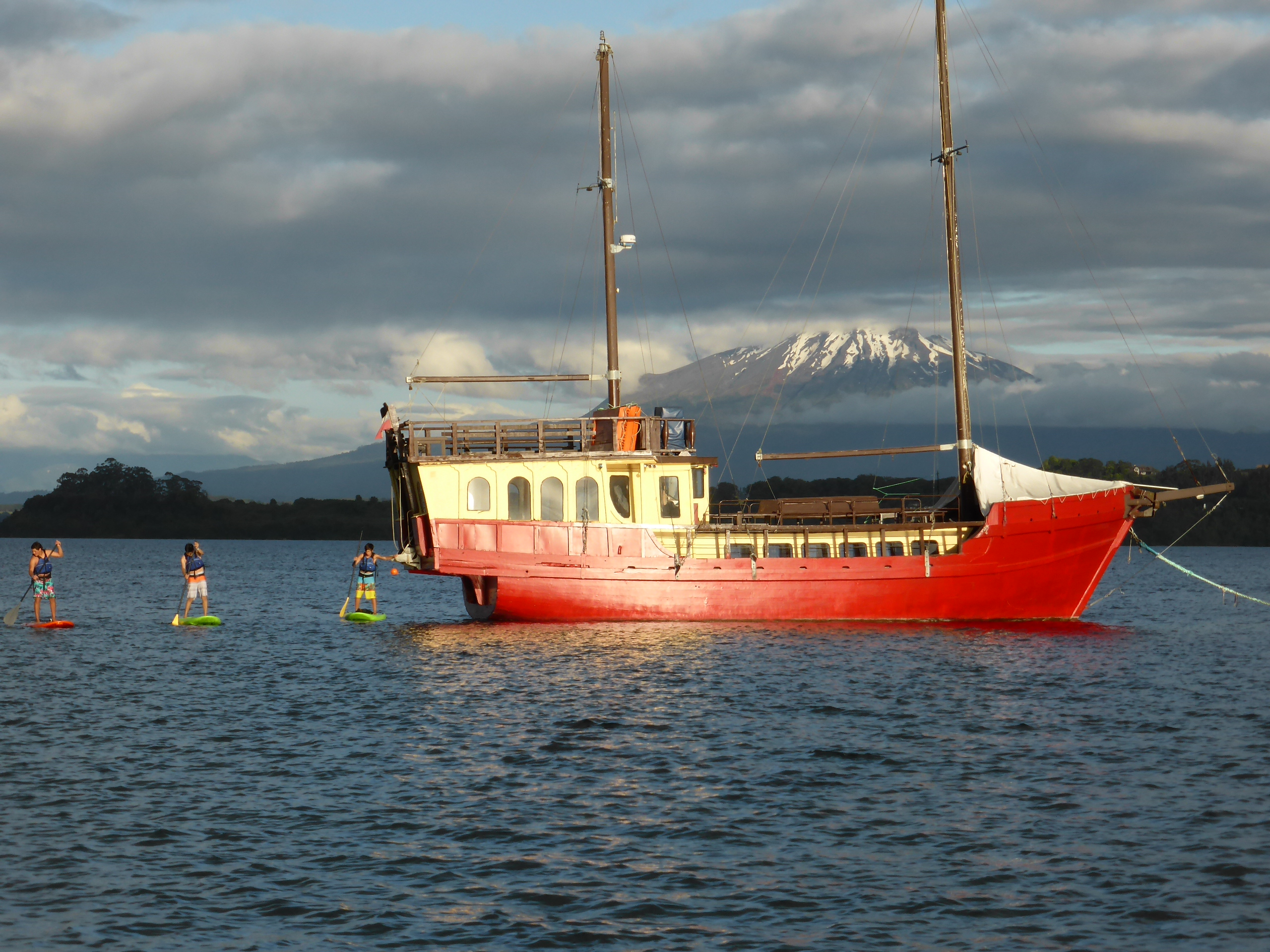
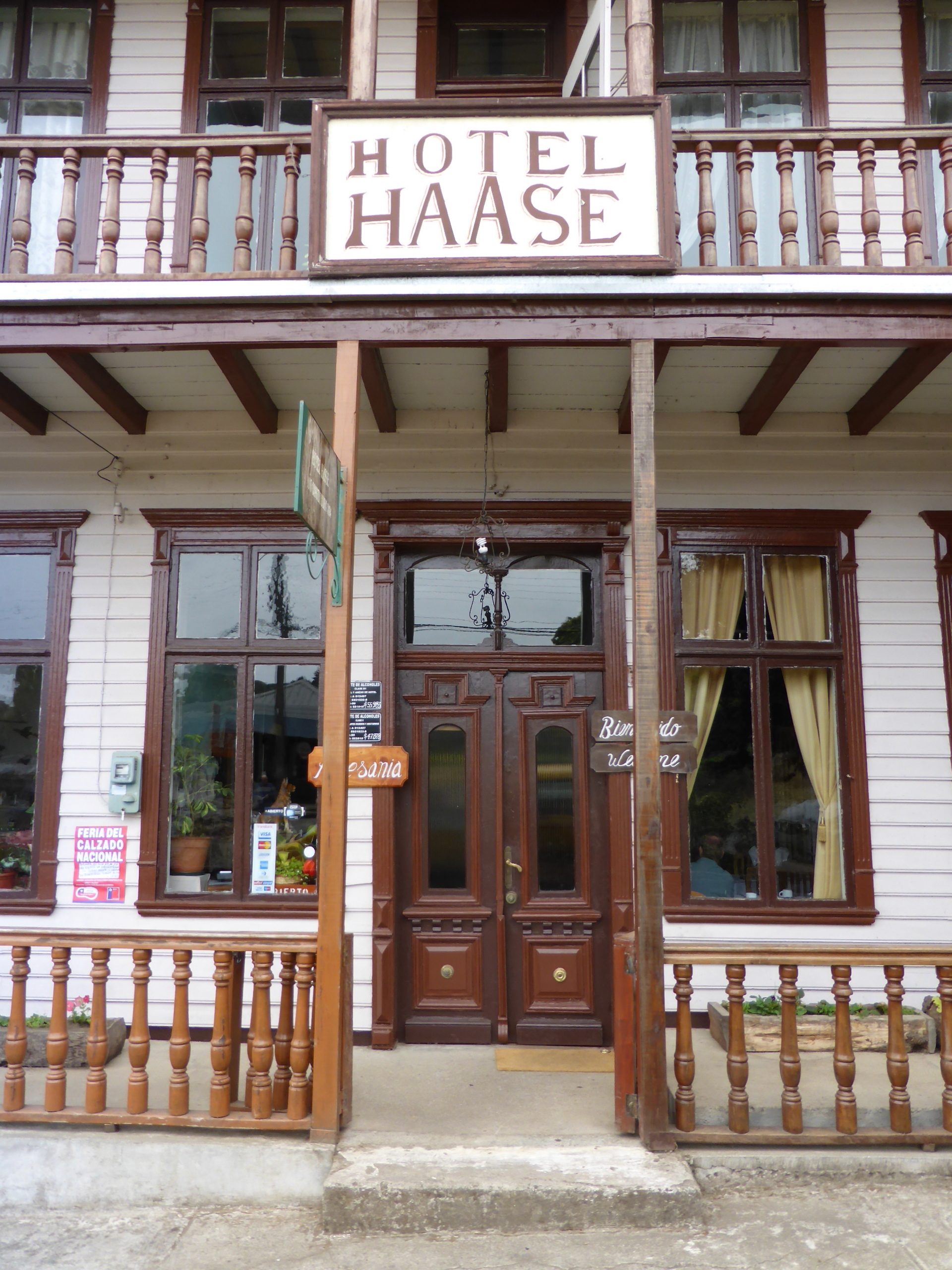
Our destination this evening is the very upmarket Puyuhuapi Lodge and Spa which can only be reached by boat leaving our cars on the other side of the lake.  Built to take advantage of a series of hot springs, the attraction is its almost complete isolation and apart from a phone and single computer in the entrance there is nothing for guests to do apart from lie back and relax.  We had hoped to get there early to do likewise but just 17km from Puyuhuapi we were stopped by roadworks which have closed the road from 2 to 5 pm. Missed it by just a few minutes!  So here we are sitting in a long line of similarly uninformed travellers catching up with notes for our blog. An elderly gentleman came by after a while and apologised with his hand on his heart on behalf of the entire Chile nation for the inconvenience – a small consolation.

Hornopiren – Caleta Gonzalo

We are now in Los Antiguos having crossed the border into Argentina yesterday afternoon so our first chance to catch up with the blog.  This post is taking us back to the trip from Hornopiren to Caleta Gonzales on 15 January.

On the gravel road to Hornopiren Mike’s car had been cutting out on the downhill corrugated sections so he spent quite a few hours working through possible fixes before concluding the carbs were flooding most likley due to the viton tipped needles bouncing off the seats in the float bowls.  Hopefully a new set of float valves and slightly lower float level will make a difference.

Only 10 km of driving today with most of the day spent on ferries so the cars get a bit of a rest.  The first ferry takes nearly 4 hours heading directly south.  A comfortable cruise well sheltered from the open sea and views both sides of rain forests right down to the water’s edge and snow capped mountains above.  Very similar to Norway except far more diversity and brighter greens.  In our enthusiasm to keep moving we were almost the first onto the ferry – the smart locals and large trucks hung back knowing they would be first off for the 10 km dash to the next ferry.  The rest of of us just waited patiently for another couple of hours.  A good chance to chat to other travellers so we talked with Bob and Dave, cyclists from Wisconsin who had spent 10 years planning for their trip the length of the Carretera Austral to Torres del Paine.  Even though they had well prepared bikes with all the high tech gear and tyres, riding on the loose gravel was still a big challenge and they come off a few times every day

P1000344 P1000345 P1000348 P1000354

Our overnight stop in the cabins at Caleto Gonzales in Parque Pumalin is just a few metres from our ferry destination.  Parque Pumalin was the vision of Douglas Thompkins, the mountaineer, conservationist and founder of North Face who in 1989 sold the company along with Espirit which he jointly owned with his wife Susie.  In 1991, he bought a large, semi-abandoned plot of land in the Chilean province of Palena. His objective was to protect the 42,000 acres, most of which was primeval rainforest from future logging. After moving to Reñihué to live full-time, Tompkins began developing plans for a larger park, gradually acquiring additional adjacent properties from willing sellers to form what is today the 700,000 acre Parque Pumalin.  In total he has purchased about 2 million acres of forest in Chile and Argentina and is funding their maintenance until the governments can take them over as National Parks.

There is more information about the park at:

http://www.parquepumalin.cl/en/index.htm

Puerto Varas to Hornopiren

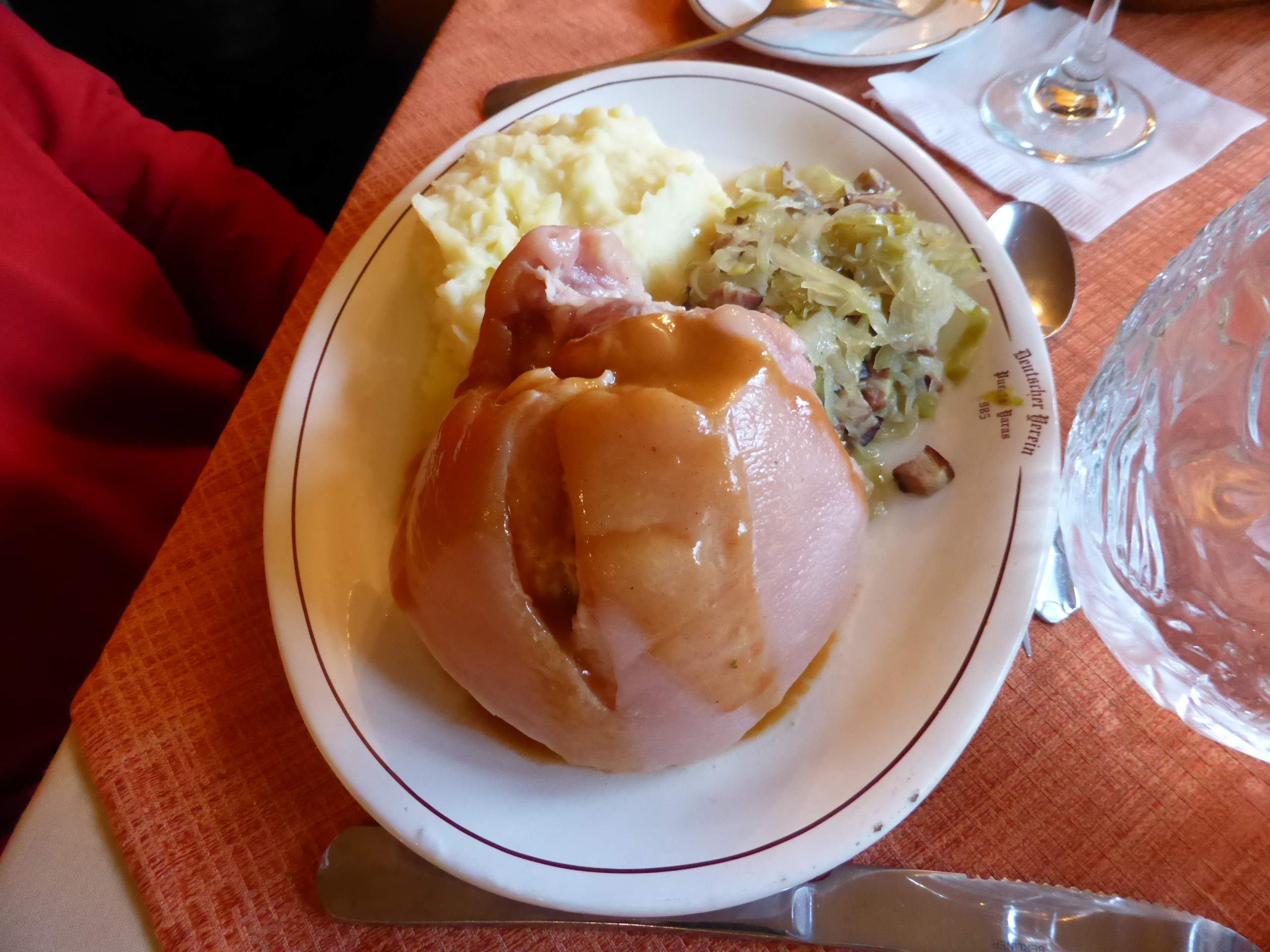
A short drive of 120 km today so we decide on a late departure – good thing for those of us who with some trepidation went with Dave and Laurel last night to the best German restaurant in town in the German Club. As it turned out it was the only German restaurant in town and we were the only customers. Dave went the full nine yards and ordered Eisbein while we watched in awe. It must have been the house speciality because all the fish dishes were very ordinary.  Luckily the Chilean wine made up for the quality of the meals.
P1000335 P1000338


The drive out of Puerto Varas took us to the Carretera Austral Route 7 which followed the coast south to the first of the many ferries we will be catching over the next week.  The clouds started lifting and we caught glimpses of the impressive snow covered peaks towering over us.  We had been warned of the many roadworks along Route 7 which the Chile Government is seriously upgrading to attract more tourists to this spectacular part of the world with its unspoiled rainforests and challenging adventure opportunities.  As we get closer to Hornopiren the stretches of new bitumen start becoming longer which is a bit of a relief and we didn’t find any seriously rocky sections of the old road.  What a fantastic road it will be when it is fully sealed.

P1000358 P1000371


Hornopiren is described in the guide books as a frontier town which is pretty accurate.  Someone with a bit of spare cash should be investing in the expectation of an adventure tourist boom when the road is sealed.  Today it is fairly run down and as we drove through the town centre a crowd of locals were wandering around the recently burnt down remains of what would have been the largest store in town.  A bit sad but hopefully they bounce back.  As it was still too early to check in some if us drove out to the start of the National Park.  Not easy to find with almost no sign posting and Garmin took us the wrong way we finally made it to find there were several walks starting with a 2.5 km walk along the river.  A bit of exercise sounded appealing but the track was very muddy and tangled with exposed roots so we gave it away after a few hundred metres and headed back for a beer.  Our accommodation at Hosteleria Catalina is pretty basic but easily the best option in town and our host is very excited to have us here – and it has wifi!

Temuco to Puerto Varas

Thankfully no disco last night so everyone got a good nights sleep and walked a few km to the market after breakfast.  Pity it didn’t really get going until 11 am, our agreed departure time but the weather was superb so nobody was complaining.  There didn’t appear to be any interesting alternatives so we headed directly south on Ruta 5 tollway.  The countryside around our overnight destination, Puerto Varas, was settled by German immigrants in the 1840s and it wasn’t hard to see why they were attracted to this area.  Today it looks just like parts of Germany with rolling hills, beautiful lakes and neatly cultivated farms. Even the timber houses look Bavarian.  This will be the last serious town before we head into the National Park area so we splash out on dinner at Casa Valdes right on the lake.  A huge choice of fish with perfectly cooked sea bass getting the vote as the best meal yet.

P1000290 P1000294


A free day so we head for Puerto Octay which was recommended as a typical German village with caffe and kuchen as the speciality.  The coffee and cake was a bit of a disappointment but the cemetry overlooking Lake Llanquihue made up for it – must have been a healthy place because most of the residents had survived into their 80s with one seeing out their 105th birthday.

P1000322 P1000324 P1000314 P1000315

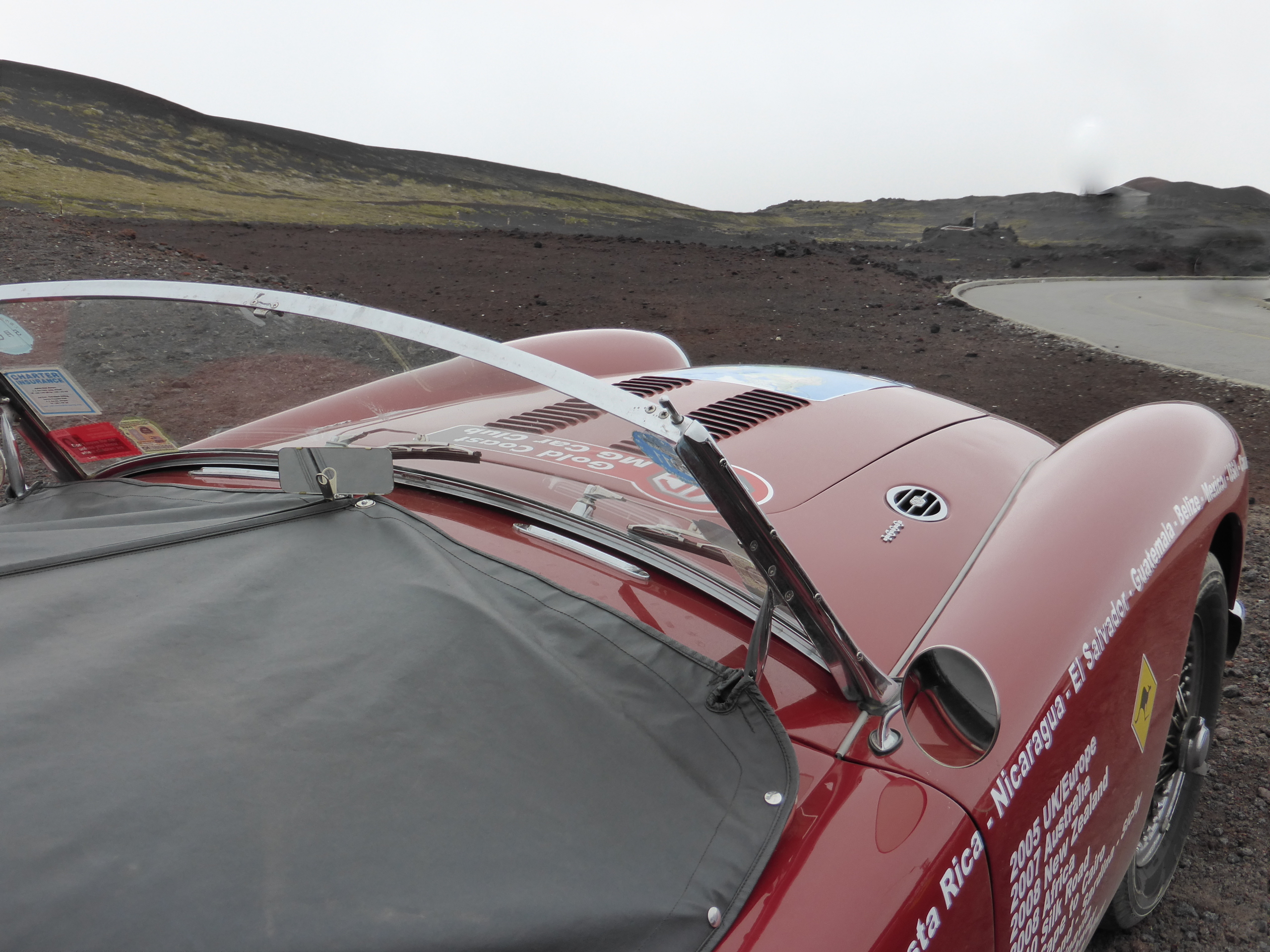
We continued driving around the lake with its dozens of small beaches and camping spots to Volcano Osorno on the opposite side.  By this time the drizzle had set in but we took the beautifully surfaced road to the parking area well above the tree line – it would have made a superb 10 km special stage.  No views down to the lake through the mist but the moonscape of lava flows from the 2800 m peak were pretty spectacular.

P1000326 P1000334


Tomorrow we head into the National Park area with its myriad inlets and islands confirming Chile’s claim as the country with the longest coastline in the world.  Puerto Varas is on the 42nd parallel, roughly the same as Hobart, and we will end the southward leg at the 55th parallel so we have along way to go in some of the most remote regions in the world.  According to a backpacking couple we met today who had recently travelled along the roads we will take there are long stretches of roadworks with large rocks everywhere so it could be a slow trip and we aren’t sure where the next internet will be – possibly Coyhaique on 18th Jan.  Should be a testing time for cars and drivers…

Valaparaiso to Temuco

Everyone was ready to hit the road at 8 am despite a few bleary faces – some of our rooms were directly above the dance floor where the action started late and went through until after 3 am at a million decibels.  We are learning they like their music VERY LOUD!

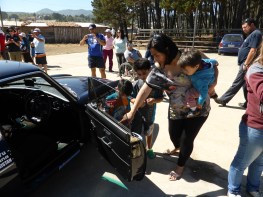
No dramas getting out of Valparaiso and we have decided to take the scenic route close to the coast.  Morning tea spots were hard to find so we ended driving through a camp ground to a riverside area where a large crowd quickly gathered and the kids figured out we had a good supply of clip on koalas.  All good until Guy, Laurel’s son who has joined the trip for a few days with his Chilean girlfriend Andrea, manages to lock the keys of his rental JAC in the ignition.  Good move to prevent possible theft by the young kids but it almost defeated us too.  Fortunately the local break-in expert arrived and with the help of a large screwdriver, a piece of wire and a loop of dental floss, the lock was lassoed and pulled up.  Phew!  Have to say the JAC is such a rubbish car some might have been tempted to leave it there.  Chinese cars, buses and trucks from dozens of brands are everywhere on Chilean roads.  The Higer bus we took to pick up the cars from San Antonio  was comfortable enough but it couldn’t get up hills to save itself and had axle whine which would have appalled former Holden colleague Roger -“A singing axle is a happy axle”- Gibbs.

For the final leg we took Ruta 5, the Pan American Highway which today is a fairly boring 4 lane tollway.  Good value at around $5 per 100 km and certainly a good way to cover large distances quickly. We have been surprised at the high standard of Chile’s roads – even the secondary roads in this part of the country are better than the equivalent roads in Australia.

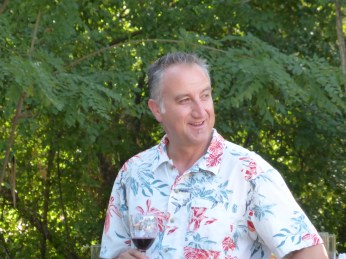
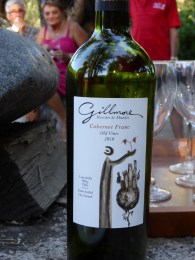
Our overnight stop on 10 January is the Tabonko Guest House at the Gillmore Winery where we meet our warm and generous hosts Andreas and Daniella.  They are the owners of the winery which has a history going back around 400 years to the time when the Spanish first settled around Concepcion, now Chile’s second largest city.  Like many
small boutique wineries they are concerned about Chile’s reputation as an exporter of low cost quaffing wines and are concentrating on just two varieties, Cabernet Franc and Carignan.  Granitic soil, dry irrigation and good winemaking techniques make some great food wines which we enjoyed with slow cooked beef and turkey.  We were interested to learn why Chile now mostly grows French grape varieties.  Andreas explained that some Chileans became very wealthy in the 19th century, mainly through exports of phosphates, and developed a taste for everything French, including their architecture and wines.

P1000228 P1000237

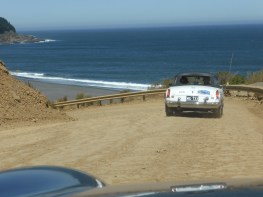
Another beautiful sunny morning and we again have a choice between a boring 5 hours along the tollway or the 8 hour  scenic route.  Not a hard choice, we took Daniella’s recommendation to drive towards Concepcion via the costal route. Lots small fishing villages, with families camping on the beaches enjoying the black sand and modest surf.  Apart from a short section of gravel road, Ruta del Mar must be one of the best coast roads anywhere in the world, right up there with California’s Highway 101 and the Great Ocean Road but with almost no traffic.  The only disappointment is a 70 km/h limit in the interesting bits.  Then back to Ruta 5 for the final 250km to our overnight stop in Temuco.

P1000261 P1000269

P1000273 P1000277

Our hotel was another huge casino, similar to the one in Vina del Mar so we opted to eat out.  Not much open on a Sunday evening so we all ended up at a nearby Italian restaurant.  Pizzas, salads and excellent wine for $40 a couple including a generous tip and we have enough leftover pizza for lunch tomorrow – no wonder travellers say Australia is expensive.

Picked up the cars

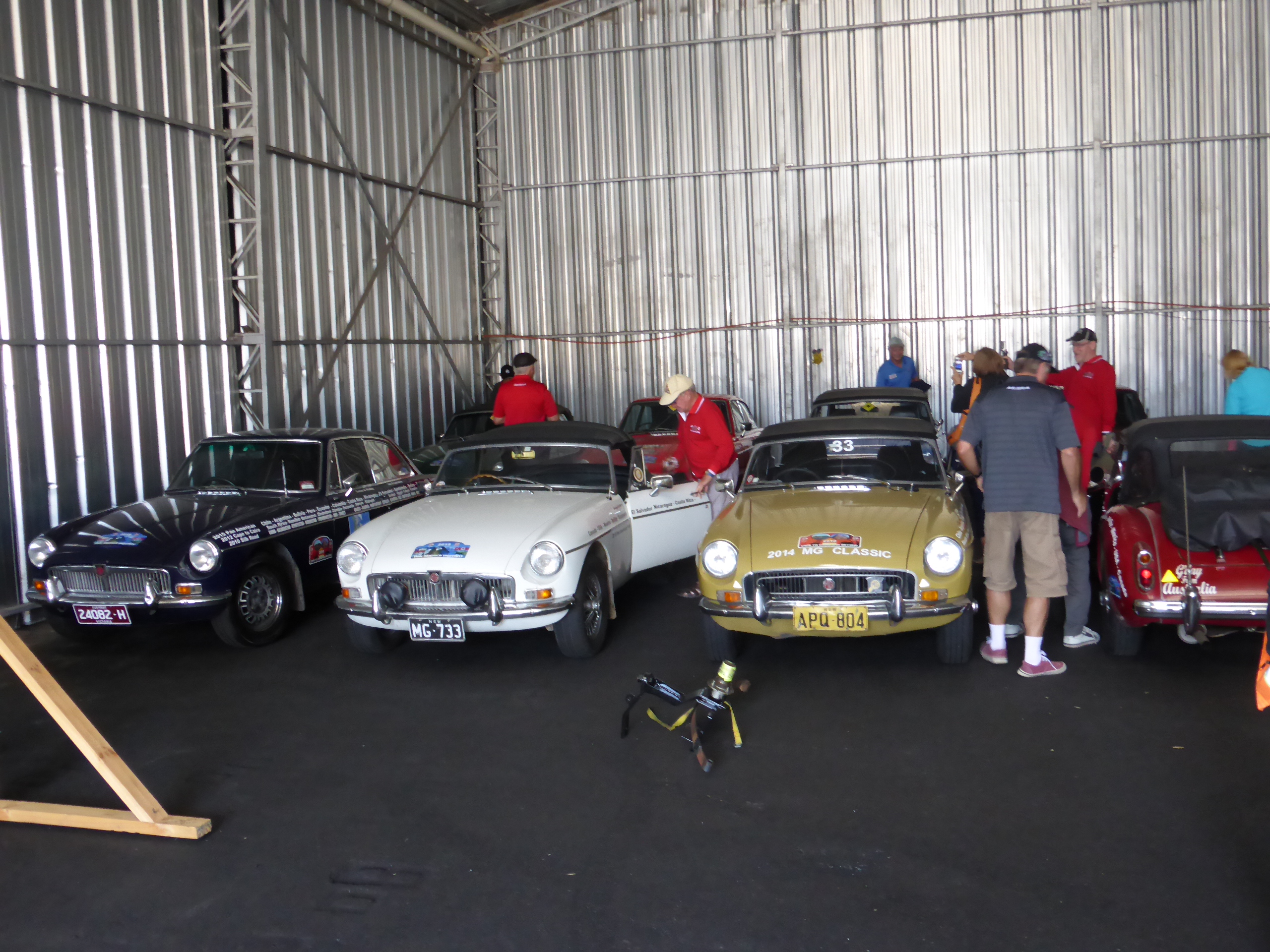
Our first attempt to pick up the cars from the San Antonio port turned into the usual paperwork drama with disagreement between Australian and Chilean customs agents about what documents were required. Things were looking bleak when the Chilean customs boss said he would only accept an original document mailed from Australia before the cars could be released but Ignacio, our Chilean agent came to the rescue and produced an acceptable alternative after a 3 hour round trip back to his office in Santiago. By this time it was too late to process the cars so we came back first thing Thursday and by lunchtime were allowed into the warehouse to check the cars.  Most cars started without problems although one of the cars was missing a UHF radio. Ours had been unscrewed and was lying on the floor with all the cables still connected so we can only assume someone had been disturbed in the act.  A short wait for siesta to finish and gates re-opened and we were off for the drive to our hotel in Valparaiso.

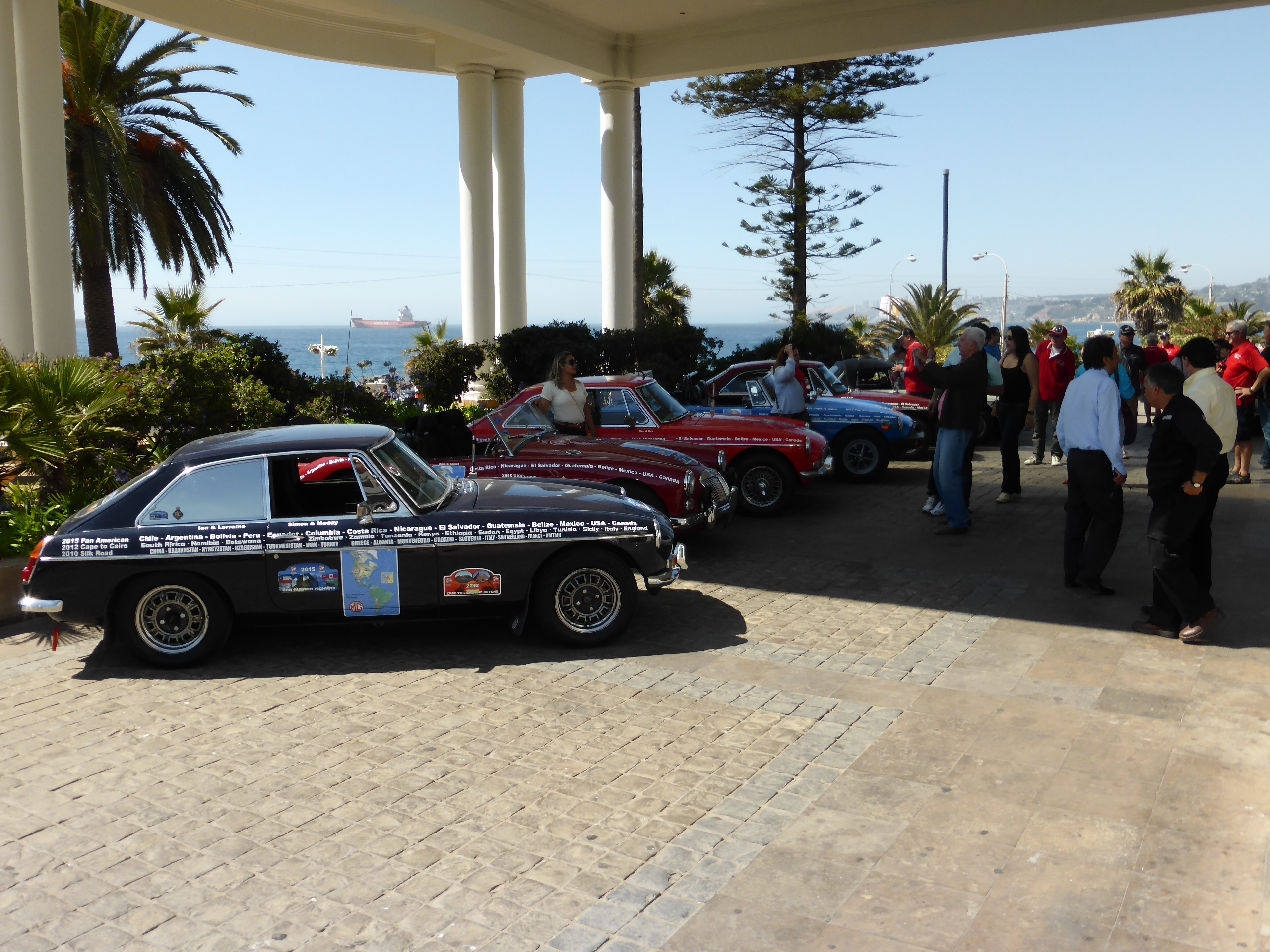
The hotel is in Vina del Mar, just along the beach from the centre of Valparaiso.  Originally a vineyard, it became the place to live after the 1906 earthquake which just about destroyed Valparaiso.  We learnt that Valparaiso, sometimes known as ‘little San Francisco’, shares many features with its US sister city apart from both being flattened by the same earthquake.  Both have many beautiful timber buildings and in recent times Valparaiso has been designated a UNESCO world heritage site and become a magnet for the arts.

Today is a rest day so the hotel garage has become an MG workshop as everyone puts in their final preparation for the driving trip which starts tomorrow.  The cars created plenty of interest when we arrived yesterday so this might be setting a pattern for the next weeks.

P1000128 P1000135P1000143

Arrived in Santiago

Everyone has now arrived in Santiago where we were told it doesn’t rain from October to March.  A beautiful city by South American standards where a battalion of park workers armed with hoses connected to an abundant stream direct from the Andes make sure everything stays green.  On our first evening, John found a nearby restaurant which promised to deliver the authentic Chile experience, and it did in spades.  One end of the table groaned under the weight of two huge plates of steaks and blood sausages while at the other end where the majority were sitting, a few pieces of undercooked fish were shared sparingly.  There may be a parable somewhere in this.

Today we all shook off the jet lag and headed into the old part of town using the very efficient Metro.  We had split into several groups but ended up bumping into each other at the Pre Columbian Art Museum where we all pretended to know more than we really did about the history of the various civilisations of South and Central America.  Dave came up with the most challenging version in which the original settlers of South America and Australia all originated from Antarctica….hmmm,

We also walked through the city square where Allende was overthrown by his military on 11 Sep 1973 but couldn’t find any apparent evidence of the bullet holes.

Santiago’s most popular tourist spot is the 900m high Cerro San Cristobal with its impressive statue of the Virgin Mary unfortunately now dwarfed by a huge communication tower located less than 50 metres away.  You would have thought in a country where 90% of the people are Catholics that they could have come up with a better idea.  We started on the walk up the hill to avoid the lengthy queue for the funicular railway but after two false attempts at finding the right track, gave up and walked back to the now much shorter queue.  A much better option on a 32 deg day and both the views and cool breeze at the top were appreciated.

An early start is planned to tomorrow when we get a bus to pick up the cars…

One week to go

We were a bit surprised how many were following our adventures on the 2012 Cape to Cairo trip with our MG friends so we’ve joined the 21st century and started a blog to let everyone know about the next trip – driving the legendary Pan American Highway.  We will once again share this trip with our friends Simon and Maddy – this time Lorraine and I will drive the first leg from Santiago south through Chile to Ushuaia and then turn northward to drive Route 40 through Argentina to Bolivia and Lima Peru where we will hand the car over and head for a relaxing week in the Galapagos Islands.

Just over a week before we leave for Santiago Chile and the 8 cars are already ‘unstuffed’ from the containers ‘in perfect condition’.  ‘Unstuffed’ seems to be an expression used by shippers which we assume is the opposite of something we would prefer not to encounter on this trip.

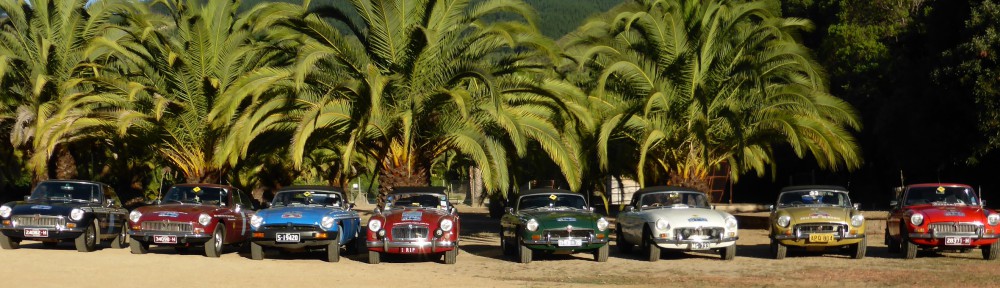
7 of the crews are well known from the Cape to Cairo trip and we are pleased to also welcome Mike and Kay who are very active members in the Victorian MGCC.  Interestingly the 3 Victorian entries are all GT models while the Queensland, NSW and SA entries are all soft tops.  There is a clue in the weather forecast for Patagonia  ‘cold with unrelenting gale force winds’.  Sounds just like Melbourne to me…..

We have set up the website with separate pages to tell a little about us and the car followed by the stories from the Silk Road and Cape to Cairo trips.  There will also be a gallery where we will post pictures of the trip.

If you would like to be alerted by email when we post new material then just become a Follower by clicking on the Follow icon.  We look forward to your comments!