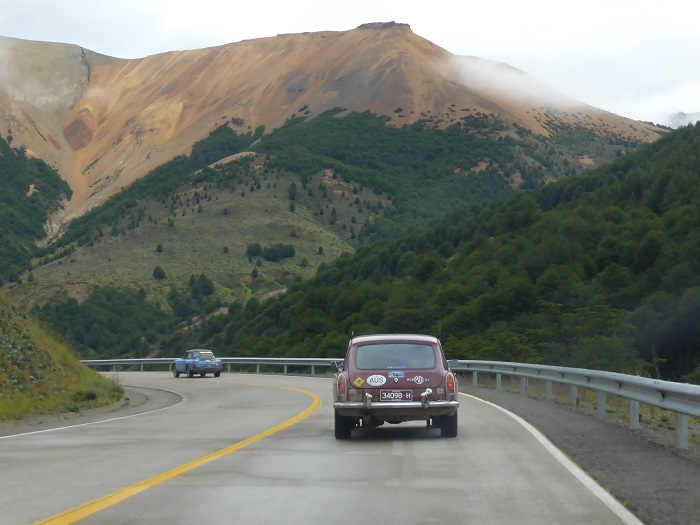
Rio Gallegos to El Chalten

As we are leaving the Hotel Patagonia a very excited guy came up to us to tell us he was also travelling Ruta 40 in an old car but his was a 1920s Ford – I’ll leave it to my ex-Ford friends to identify the year and model.  A short detour via the waterfront which is totally deserted this morning but gets more interesting towards the end where there huge piles of rusting machinery from earlier eras.  In one yard there are rows of old boilers and steam engine parts in advanced stages of decay.  Maybe an opportunity for someone to come in and preserve the history of Rio Gallegos in a museum?

IMG_1712D IMG_1721D

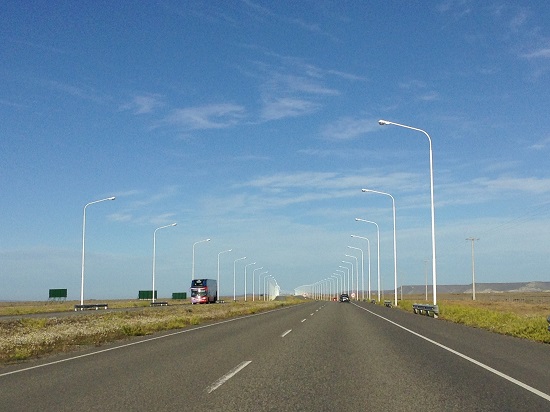
We then rejoined the main highway out of town and were amazed by what appeared to be recently installed overhead lighting.  Elegant poles and light fittings which continued for the next 26 km!  How can a country with a debt problem like Argentina’s commit to a folly like this?
IMG_1732D P1000908D P1000902D

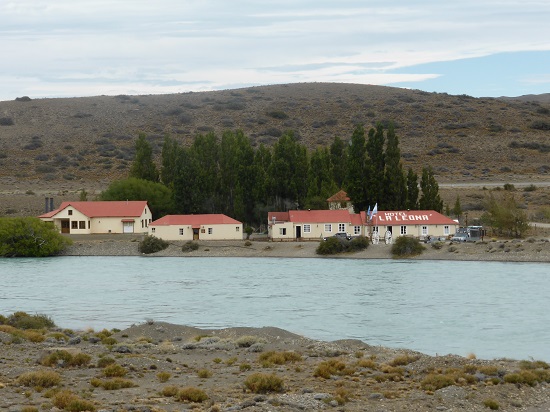
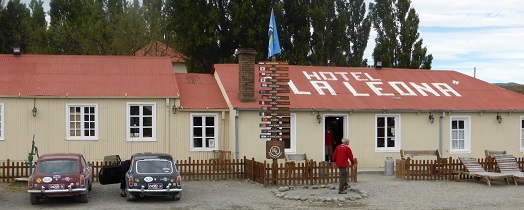
Apart from one lonely cyclist there was nothing for the next 200 or so km – no towns, no cross roads, just barren brown pampas.  Lago Argentina looked just as impressive, this time heading northwards.  On the way down we had passed right by the lonely hotel at La Leona but this time we stopped to find out more about its connection with celebrities.  Butch Cassidy and the Sundance Kid hid here for a month after robbing the Bank of London in Rio Gallegos in 1905 and lasted another 5 years before being killed in an epic shootout in Bolivia.  We think of Ned Kelly as a bushranger who got around a bit but he was a rank amateur compared with these guys.

El Chalten is another Mecca for trekkers but tiny compared with El Calafate and less developed.   No phone coverage, just one ATM and mind-numbingly slow internet.  One guy we met had spent two days trying to send an email.  The big attraction are the Fitzroy ranges – 3400m high with jagged ice and snow covered peaks.   The town is full of young people, mostly serious walkers, which is pretty refreshing compared with Australia where most walkers are people just like us.  The town has a real hippy feel to it so this evening we find a restaurant called Techado Negro with good vegetarian options.   Good food and very drinkable malbec at $10 a bottle but the table full of noisy Americans just behind us was a bit of a downer.  The guy at the next table leant over and asked where we from – once he had established we were Australians, we jointly reflected on how much space people from different cultures could dominate.

Ushuaia to Rio Grande

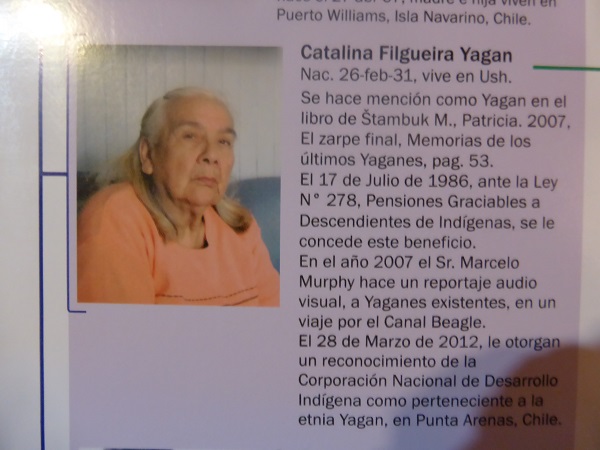
Only a short day’s drive back to Rio Gallegos today so we delayed our departure until noon leaving time to visit the local museum dedicated to the indigenous Yamana people.  They arrived around 6000 years ago with their ancestors having made the long migration from Central Asia via the Bering Strait and somehow managed to survive the harshest conditions in Tierra del Fuego – the Land of Fires named by early sailors who observed the fires they burned to keep warm.  The Yamana managed to survive a semi nomadic existence living off mussels, cormorants and the odd beast while wandering around completely naked – apparently this was preferable to wandering around in constantly wet fur clothing.  The one concession to the weather was that they spent a lot of their time squatting so they ended up with baggy skin around their knees and a serious case of pigeon toes.  Not really a good look.  All went well until some well meaning missionaries decided they needed salvation around 1840.  They may have survived the salvation but unfortunately most didn’t survive the introduced diseases so today there is only one direct descendent left – an 84 year old woman named Catalina who still lives in Ushuaia.

P1000881D P1000862D P1000884D

The drive to Rio Grande retraced our steps on the way south so no surprises and a good road all the way.  There is only one town along the way and it is supposed to have two attractions.  The first was easy – La Union Panaderia is reputed to have the best pastries for miles around, in fact the only pastries for miles around and everyone and his dog were there.  The second attraction was a bit of a mystery to everyone.  Tolhuin is supposed to have the southernmost race track in the world but nobody we asked knew anything about it.  A pity, especially for RIP which only last year got to drive around the northernmost race track in Norway.

IMG_2401DIMG_0113

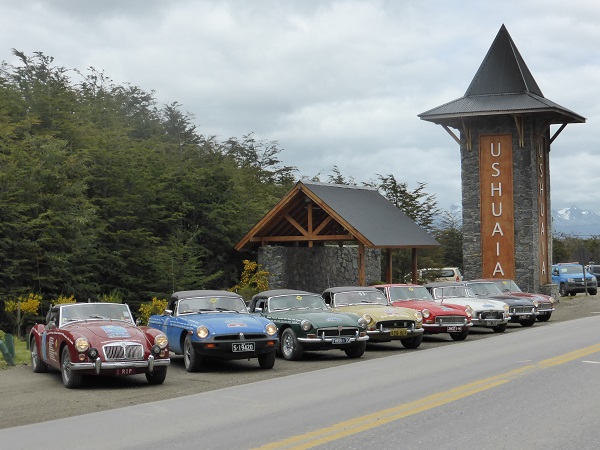
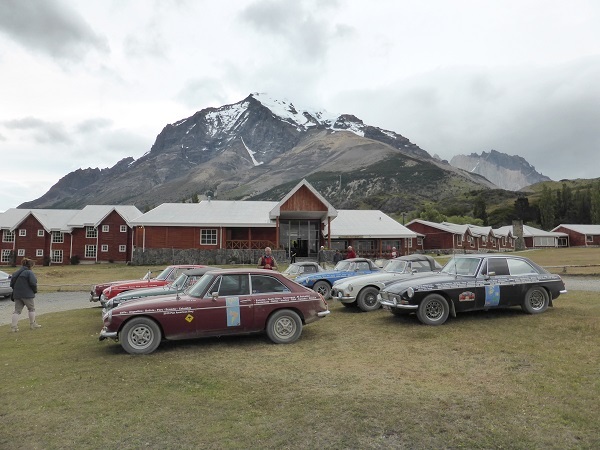
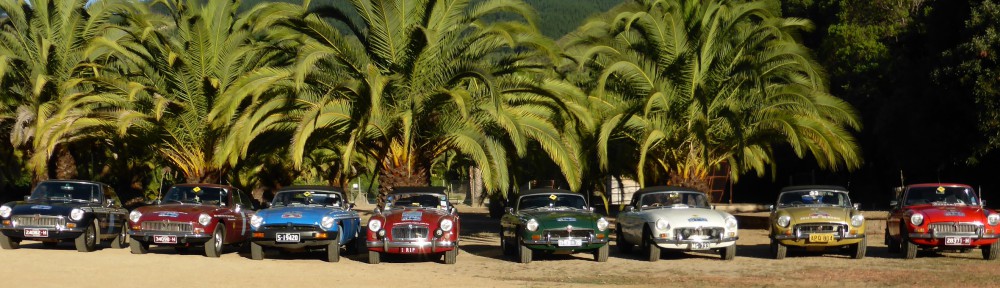
Must have been a quiet news day today because the Patagonia TV channel had a story about the 8 Australian couples who tour the world in their 1961–74 MG cars.  Caused quite an excitement in the Italian restaurant where we were eating this evening when the other customers  made the connection with the MGs parked outside.

The end of the world – Ushuaia

The town claimed to be the ‘end of  the world’, Ushuaia normally has around 70,000 people but the population grows at this time of the year, the  peak season for Antarctic cruises and adventure seekers.  From 1884 to 1947 Ushuaia was a penal settlement, Argentina’s equivalent of Port Arthur, and it wasn’t until the 1950s that there was even a road into town.  It then became a naval base, with signs around town suggesting that ownership of the Malvinas is still an issue.  Now it is primarily a container terminal and a base for tourism – nearly everyone we meet in the streets has come here from somewhere else.

Our hotel is around 5 km from town and right on the water’s edge and we have three nights here to catch up before we head north again.  It must be a challenge to walk from the front door to your car in a howling gale but we are blessed with fairly calm weather for the three days stay in Ushuaia.  Don’t know why we brought the big bag of warm clothes and thermals, most of the time we are walking around in short sleeved shirts.

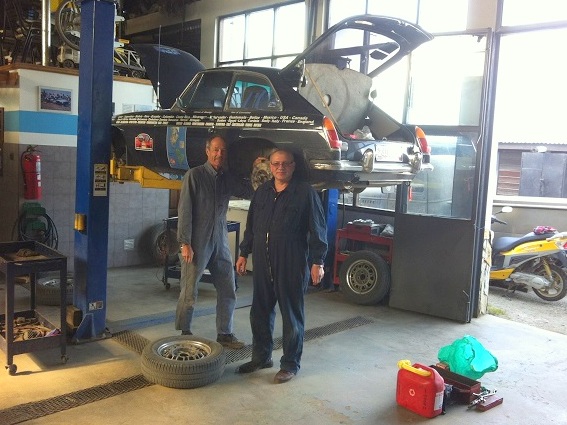
On Sunday we have arranged to use a local garage run by Carlos to service the cars.  Floor space is fairly tight but 3 hoists accessible after he has moved his Fiat race car with a wild cam and completely open exhaust out into the street with much revving.  His neighbours must love him.  Nothing loose underneath despite the pounding and a good opportunity to grease all the suspension bits ready for the next stages.  The headlight problem turned out to be nothing more than a faulty earth for the new relays installed shortly before we left – apologies to Lucas, not your fault this time.

IMG_0729DD P1000837D

Our trip had aroused considerable interest among the local tourism people so each evening we were invited to park our cars in the centre of town which attracted lots of attention and even brought out the local TV news crew – more on this later.

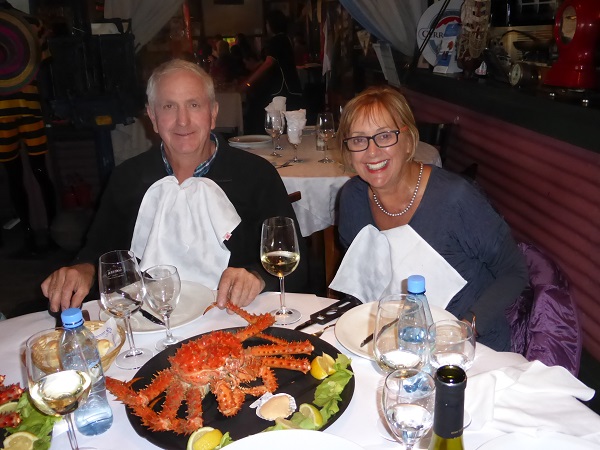
As well as being a jumping off point for Antarctic and local cruises, Ushuaia is also a great place to sample seafood with King Crab being one of the specialties.  Tough work but someone had to do it..

P1000843D P1000854D

Punta Arenas to Ushuaia

No dramas getting away and down to the ferry terminal for the trip across the Magellan Strait and back into Argentina.  Way too cold to brave the deck so we cram into the cabin area alongside three young guys who are travelling from Atacama in the north of Chile to Porvenir for a soccer tournament.  These guys had serious attitude but with a great sense of humour and one spoke reasonable English.  They were playing Chilean music and Lorraine started to groove along so the youngest one, Diego asked her to dance with him which she did with style.  Another example of the spontaneous affection we are enjoying.

P1000820D P1000821DD

It would be interesting to learn how Chile managed to secure a large lump of the southern part of Patagonia and effectively cut off any possibility of a direct land route to the other piece of Argentina where Ushuaia is located.  A least it keeps the immigration and customs people at San Sebastian pretty busy.

The road is called ‘Ruta Fin del Mundo’ or Route to the End of the World.  It seems very appropriate for the treeless windswept plain skirting the Atlantic Coast for the first couple of hundred kms but then we were back into mountain ranges and vast forests of Antarctic Beech for the final 100 km heading west into Ushuaia along the 55 deg parallel.

P1000822D P1000829D

Somehow the mayor had heard about our visit so he sent along his deputy and the tourism officer to greet us in the plaza.  Lots of interest from all the bystanders, many of who were also travellers from other parts of South America.  A few nice speeches and we were off to our quaint hotel located at the end of a long dusty track about 5 km out of town.  Quaint in appearance and that wasn’t the only thing………..

I had hoped to get good news about a package of car parts which Simon had shipped a couple of weeks ago but are now stuck in Buenos Aires customs.  A job for tomorrow!

Torres del Paine to Punta Arenas

A very early start, cars rolling at 5:15 am to drive through the National Park to Lago Grey where we have booked a 3 hour cruise to the face of another glacier.  Still very dark and we have a Lucas electrics moment when the headlights start flickering.  No time to find what has shaken loose over all the corrugations so fingers crossed they won’t die completely before sunrise.

Soon the first sunlight hits the 3000 m peak of the Torres and we are rewarded with a spectacular show as the icy slopes gradually light up followed by the chiselled rock faces. The closest experience in Australia would be sunrise at Uluru except we are winding around a gravel road beside the lake so the views are continually changing.

P1000769D P1000777D

Right on schedule we roll up to the Hotel to pick up the cruise tickets then stroll down to the beach to enjoy a packed breakfast while we wait for the ship. So warm already, we later learn that there are only 6 or 7 sunny days each year like this with no wind to chop up the lake – how lucky is that!  On many days the cruise can’t operate because winds across the lake can reach 180 km/h.  A normal day is just cold and drizzly.

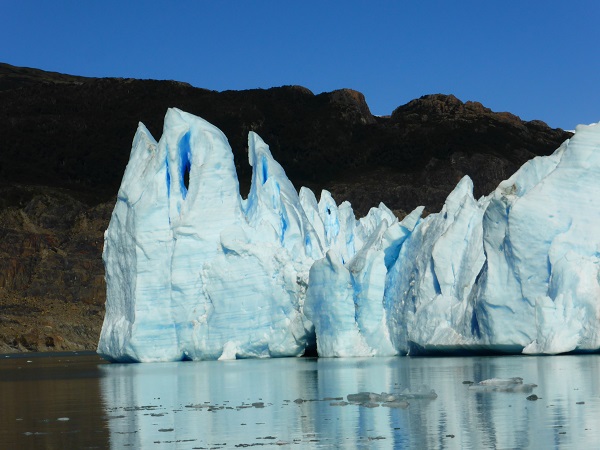
From a distance the glacier looks unimpressive. All we see are two icy arms either side of a large island but as we get closer the 20 m jagged faces dominate the view. The ship was built as an icebreaker so it has no problems running into the floating ice floes which have broken off the face so we get to within 100 m of the face to admire the brilliant ice sculptures.

P1000784D P1000797DP1000810DP1000798D

The rest of the day was a bit of an anti-climax – a return trip through the National Park and then on to Punta Arenas for our overnight stop.  Punta Arenas was a bit of a pleasant surprise.  I could recall landing at the airport about 20 years ago on a return trip from Brazil in the days when 747s didn’t have the range for a direct trip to Auckland against the Pacific headwinds.  It was bleak and windswept and the terminal was nothing more than an old Nissen hut parked in the middle of nowhere.  The city itself has grown from its early days as a penal colony and shipping port into a vibrant university town and everyone was out watching street performers of every description.  About the size of Bendigo but a lot more action.

El Calafate to Torres del Paine

Today is basically a transport stage back into Chile to see one of its biggest attractions.  Torres del Paine is a huge granite outcrop in the middle of the Patagonian plains unrelated geologically to the Andes.

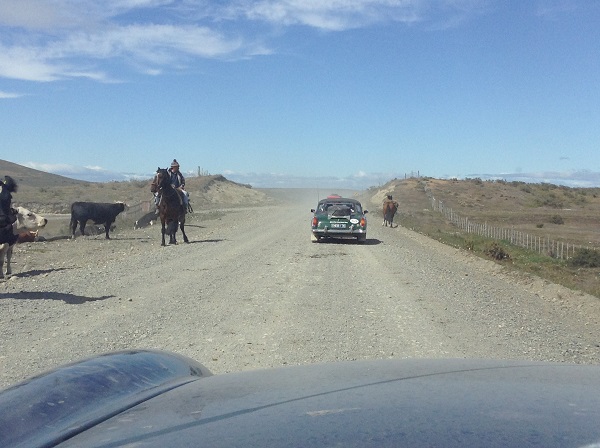
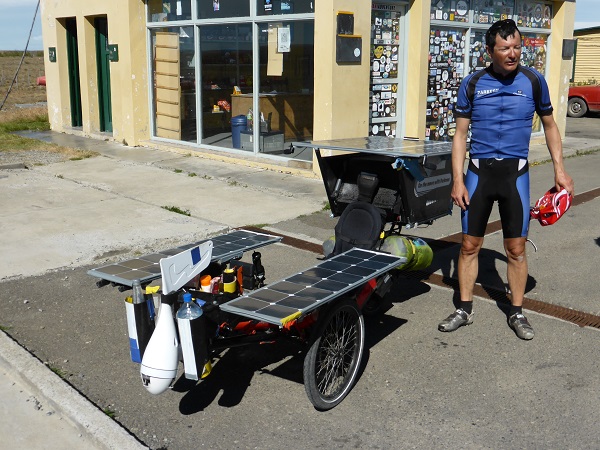
The drive was fairly uneventful apart from Navy Car taking a gravel road short cut which didn’t please everyone but we enjoyed it.  At the end of the gravel road we met an intrepid reclining cyclist from France was doing an Argentine round trip on his solar powered machine.  Pretty impressive technology and he was keen to keep everyone away from shadowing his solar cell array during the stop to maximise charge for his next leg.  The cycle even had a small wind generator to capture energy from the Patagonian winds whenever he stopped.  And today the wind was blowing – dark clouds and a howling gale which nearly blew us off our feet every time we stopped.

At our next photo stop we met a couple of motor cyclists who were riding from Ecuador to Ushuaia.  They rode the Silk Road in 2012 and were impressed that our MGs had done the same trip in 2010.  Amazing camaraderie among adventurers of all sorts which never ceases to amaze us.

P1000723D IMG_1571D P1000741DP1000749DD

As we get closer to Torres del Paine the outcrop becomes even more impressive – lots of thing to do here but we are off at 5:15 am in the morning to catch a boat ride to the next glacier.  The pressure is on!

Estancia la Angostura to El Calafate

Another beautiful day and we are off early for a long day to El Calafate and Perito Moreno glacier.  Around 150 km on gravel through endless roadworks and the remainder on sealed roads with the occasional pothole or subsidence to keep us on our toes.

Perito Moreno is rated as Argentina’s #1 tourist attraction with most people staying in El Calafate before driving or bussing the final 90 km into the National Park.  After the desolation of the highway El Calafate was a bit of a shock – hoardes of people and traffic jams in the main street which was lined with restaurants and tourist shops.  On the way in we stopped for fuel and continued straight on to the glacier to catch the best early afternoon light.

The road in winds around the bank of the lake fed by the glacier and from around 10 km away we were rewarded with great views.  60 metres high at its face and 4 km wide, it is fed by the 13,000 ha Patagonian icefield and advances 2 m each day – almost impossible to imagine.  The extensive walkways and viewing platforms allow visitors to see the glacier from every angle and watch as chunks regularly fall off with a loud crack.  Very spectacular!!

P1000661 P1000692DIMG_1468D P1000700D

Finding our hotel was supposed to be easy.  We had an address and GPS directions – how could this be difficult?  Ignoring the GPS direction to do an illegal left turn we found a steep track a little further along leading to a new four lane highway leading towards the lake.  So far so good.  The next direction was along a partly barricaded concrete road which ended with a 20 cm drop – not so good so we reversed and found a dirt road which wound around for another few kms before arriving at the very new Design Suites hotel stuck in the middle of now-where but with great views across the lake.  Unfortunately  our rooms were all on the wrong side so we got great views of a car park in a room like a sauna – the temperature control was turned all the way to cold but the architects had decided a hotel in Patagonia wouldn’t need aircon.  And the dining room wasn’t working.  Fortunately they offered a shuttle bus back into town so we could find somewhere to eat. The recommendation was to try La Cocina and enjoyed one of the best meals of the trip – thanks Ed!

Los Antiguos to Estancia la Angostura

Another warm and sunny day in Patagonia.  Just a slight breeze and already around 20 deg when we leave for our first day driving south on the famous Route 40.  Right outside the hotel is a police check point and there seems no way around so we pull up and say ‘Ushuaia’ in response to the question from the very young policeman.  No idea what he wanted to know but it seemed to do the trick and he waved us all through.

This is the recently sealed section of Route 40 and what a fabulous road.  Billiard table smooth and the first section around the lake is one sweeping curve after another.  After around 50 km we run out of lake and head into much harsher and more desolate country very similar to the Stuart highway around Coober Pedy.  Instead of roos we have to dodge llamas which, apart from one who didn’t make it, seem to be smart enough to run away from the cars.  Emus are replaced by their South American cousins, Rheas, and they appear similar enough to suggest very little evolution since Gwondana split up (about 20 million years ago?)

All the guide books recommend filling up at every opportunity in this remote area because the infrequent fuel stations regularly run out of fuel.  Luckily no shortages at Bajo Caracoles described by Bruce Chatwin in his 1975 book “In Patagonia” as “a crossroads of insignificant importance with roads leading in all directions apparently to nowhere”.  The best bit was that we were given the names of a few wineries to visit in Mendoza on our return trip – we’ve sampled a few Mendoza Malbecs so far and haven’t found a crook one yet.

P1000618D P1000629D  P1000739D P1000636D

There was much discussion the previous evening about the correct route to take to reach our destination, Estancia la Angostura.  Our written instructions seemed to be contradictory and further complicated by inconsistent highway numbering.  We stopped for a bite to eat at an intersection which we were fairly sure was the one we needed to take and our GPS agreed, contrary to the GPS in all the other cars.  We were in the lead so elected to leave the tarmac and take the heavily gravelled side road.  All looking good for around 20 km until the GPS suggested turning off at barely visible track which hadn’t been used for many years.  Not looking so good now, but a few km further along we found a signpost to the Estancia about 4 km away on the banks of a river.   A beautiful spot in today’s beautiful weather with white washed houses and farm buildings overlooking a wide wetlands area and the river in the distance.  The house is well sheltered from Patagonia’s winds by a 20 metre range of hills directly behind.  It would still be pretty bleak in winter though.

P1000644D P1000645D

Estancias were originally sheep stations established in Argentina’s ‘Belle Epoque’ in the 1880s when Argentina had the greatest wealth per capita of any country in the world.  In recent times they have turned to eco-tourism to help balance the books although this station is still a working sheep station in the hands of the family whose ancestors were some of a large group who emigrated from Croatia in the 1910s.  The house was full of mementos and photographs of the early times including some showing deep snow all around the house.  Mario and Antonio were good hosts and delivered a spectacular assido – a whole lamb barbecued on the fire burning in one corner of the large dining room.  Lorraine was also well looked after with vegetables and empanadas and Antonio kept finding more bottles of pretty reasonable Malbec to keep everyone well lubricated.

Coyhaique to Los Antiguos

The overnight stop in Coyhaique was a bit of a blur with everyone working on RIP to get it ready for the next day.  We had hoped to look up the couple we met in Puerto Varas, Asha and Arijit, who are architects working in Coyhaique.  They had told us that the town along with several others in the south of Chile have been designated as free-trade zones with no taxes on many items to encourage regional growth.  Pity we didn’t have more time to look around but thanks to Giesella and her kitchen staff who started very early we were off at 7 am in the expectation of a very long day with a border crossing into Argentina.

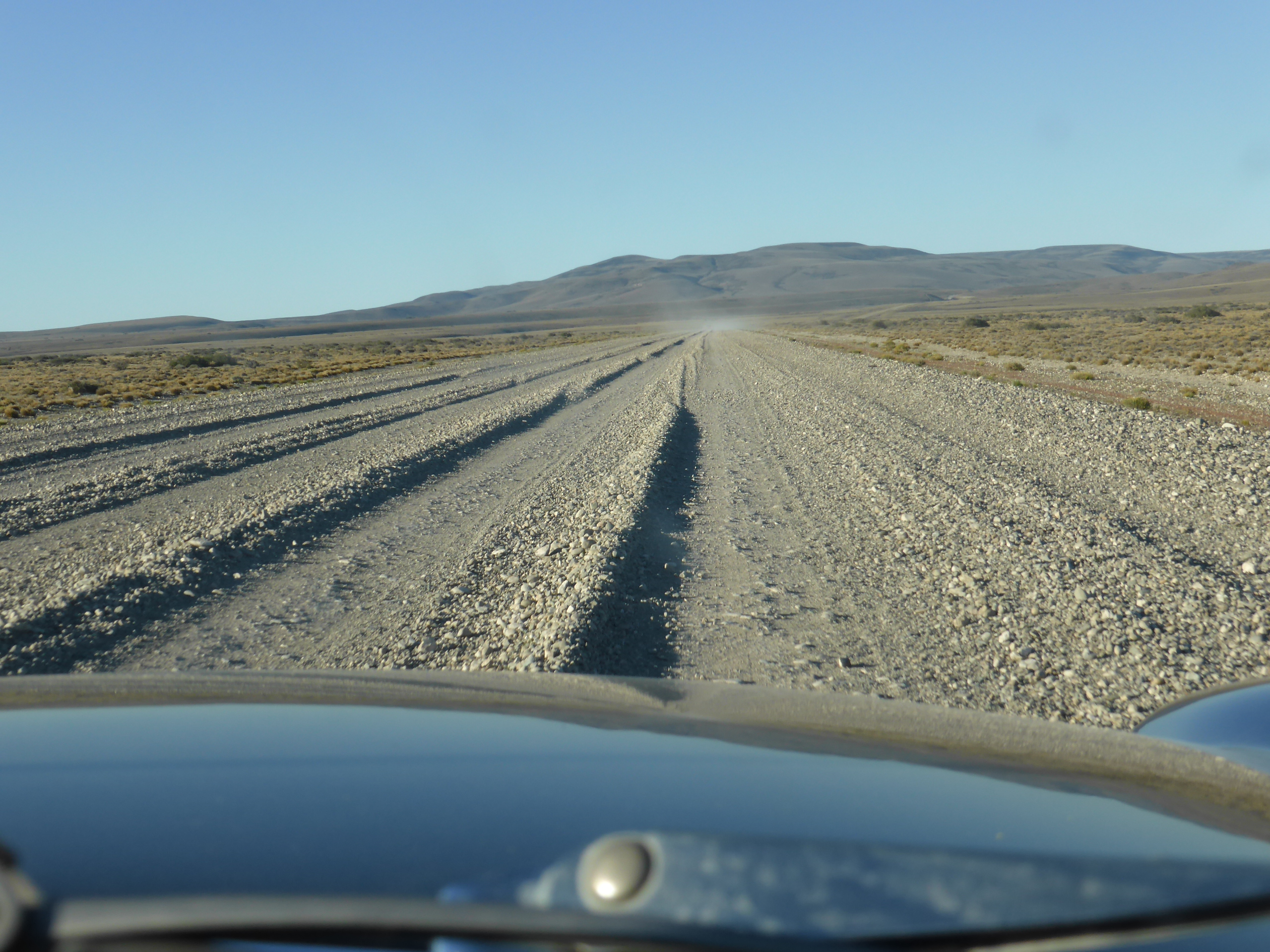
The first 100 km were covered quickly on smooth concrete roads but then turned to fairly ordinary gravel roads through more magnificent scenery for the remaining 300 km.  For more than 200 km we hugged the shoreline of Lago General Carreras which became Lago Buenos Aires across the border.

P1000558D P1000583D P1000587 P1000586

Towards the end of the drive around the lake there were some seriously corrugated sections around steep uphill and downhill hairpin bends which challenged everyone, especially Mike whose car is still cutting out.  Thanks to one of his blog responders we learnt there is a fix – spring loaded needles, pity they are on the other side of the world and he needs them now!

The border crossing at Chile Chico was a breeze, very helpful immigration and customs people who were patient with our poor Spanish so we made it to our accommodation in Los Antiguos with time to relax for at least five minutes before going out to dinner.  We’re all feeling seriously deprived of vegetables and if our first experience of Argentinian meals is any guide we could be suffering from scurvy within weeks.

We have a rest day in Los Antiguos to catch up with car maintenance and other stuff and then back on the road southwards on Tuesday.  Not sure where the next internet will be so there could be a bit of a blackout.  All going well for now.

Puyuhuapi to Coyhaique

Puyuhuapi Lodge & Spar is located in Bahia Dorita which involved another ferry ride, passengers only. Cars were locked away in a “secure” compound, although it wouldn’t have taken much to scale the fence.

The hot thermal pools were a welcome relief after a tedious day and most of our group enjoyed a good soak.  Another good thing was there was no Internet, so our bloggers got a night off!

But best of all we got to sleep-in the next morning (a rare treat) as the first ferry left at 9.30am.   Lots of roadworks, slippery wet roads, amazing scenery, and road workers snapping away merrily as we drove by.  I’m sure we have contributed to considerable time lost as the workers down tools to catch us on their iPhones.  We hope we have brought some joy into their lives, and not added unduly to the cost of the roadwork.  Today we managed to get past the roadworks, so that when they closed the road off for 5 hours we were already got through.  Dave’s car, RIP decided to play up today just as soon as we were on the made road with about 140kms to our accommodation in Coyhaique. Lots of smoke, serious discussion, and soon RIP was being towed gallantly by Shiraz, under the guidance of Mike and Kay.  Ross and Ian decide to take the short cut on gravel roads and were rewarded with amazing views and beautiful wildflowers right along the valley.

P1000488D P1000506P1000540D P1000508D

All three groups arrive in Coyhaique around the same time to find there was no record of our bookings.  Fortunately the Tehuelche Patagonia Lodge and their English speaking manager Giesella found they could put us up, and even feed us all at such short notice.  RIP is towed the last few metres up the steep driveway by one of the neighbours who has a Land Rover.  Before long all the experts were under the the bonnet and by 9pm RIP was purring away happily.
Question:  how many experts does it take to fix a blown head gasket?
Answer:  I counted 6!  RIP was just beaming after all that attention.
Most of the bloggers were happy as well as they found some wifi, some of course were under RIPs bonnet!!